

By the Optimise Health Foundation · ohf.org.au
Health literacy is the bridge between hazard and harm
Every workplace psychosocial hazard can reach the body. Pressure triggers the stress response. When it is sustained, that response can act on the cardiovascular system, on muscle and connective tissue, and on the brain. That is how a hazard at work becomes an injury in a body, and like every other pathway in safety, it can be interrupted.
The law requires organisations to eliminate psychosocial risk so far as is reasonably practicable, and to minimise what remains. That is hard to do if you can't see the pathway from hazard to harm.
Twenty-five minutes makes it visible across the whole organisation: how exposure can become harm, where it can be stopped, and what to do when you see it start. One language, for everyone.
This is where prevention actually starts.
Health-literate leaders prioritise health, model it, and build systems that support it. Capacity building strengthens people; it never makes unsafe work acceptable. And Module 2 is a strong foundation for professional development of new and emerging leaders. Module 3 provides the framework for executing the system.
Free to try · About 25 minutes · Your progress stays in your browser
Psychological
Depression, anxiety, burnout, PTSD
Cardiovascular
Heart disease, stroke, high blood pressure
Musculoskeletal
Back, neck and joint disorders
60-second self-check
Are you health literate where it matters?
The law asks organisations to identify psychosocial hazards and everyone to talk about them. That is far stronger when everyone understands how hazards cause harm. Answer honestly; nothing is saved and you will get immediate feedback.
1.Could you explain how a workplace stressor raises blood glucose?
2.Could you explain why visceral fat matters more than other body fat?
3.Could you explain how chronic inflammation links to heart disease?
4.Could your leaders explain how a psychosocial hazard can lead to cardiovascular or musculoskeletal harm?
Not an extra
Built on duties you already have
Work health and safety laws already ask two things this training directly supports.
Duty 1
Provide information, training and instruction
Employers must give workers the information, training and instruction they need to be protected from risks to their health and safety. Understanding how psychosocial hazards cause psychological, cardiovascular and musculoskeletal harm fits squarely within that duty.
Model Work Health and Safety Act, section 19 (primary duty of care), and Model Work Health and Safety Regulations, regulation 39 (provision of information, training and instruction). A national model law, which takes effect through each jurisdiction’s own legislation. Victoria: Occupational Health and Safety Act 2004 (Vic), section 21(2)(e).
Duty 2
Consult workers about hazards
Workers must be consulted when hazards are identified and controls are decided. A workforce that understands what a psychosocial hazard is, and how it affects the whole body, can take part meaningfully. That's why we run the modules before or during your psychosocial hazard assessments.
Model Work Health and Safety Act, section 47 (duty to consult) and section 48 (nature of consultation). A national model law, which takes effect through each jurisdiction’s own legislation. Victoria: Occupational Health and Safety Act 2004 (Vic), section 35.
This training supports your duties. It doesn't replace your risk assessment.
Our position
Two paths. One workforce.
The legislation asks two things of an organisation. Most programs only address the first.
Path 1 · The organisation's duty
Control the hazard
Identify psychosocial hazards, assess the risks, eliminate or minimise them so far as reasonably practicable, consult workers, and review the controls. Led by leaders, health and safety representatives and WHS teams.
We support these processes. We never replace them.
Safe Work Australia (2022), Model Code of Practice: Managing psychosocial hazards at work. Duty to eliminate or minimise risks, p. 6; consultation, pp. 8–9; risk-management steps and leadership commitment, pp. 12–13; reviewing controls, p. 29. Safe Work Australia, Differences between WHS and wellbeing: wellbeing initiatives do not protect workers from harm from hazards.
Path 2 · The missing piece
Build health literacy
Some demands can't be removed, such as trauma in emergency services, health care and education. Health literacy shows people how hazards become harm, and how their health shapes the reserve they bring to every demand.
This is what we provide.
Safe Work Australia (2022), Model Code of Practice: stress and harm, p. 6; unavoidable emotional demands, p. 35; traumatic exposure, pp. 44–46. Safe Work Australia (2019), National Return to Work Strategy 2020–2030: health literacy and recovery, p. 22. The evidence for the rest is on the References page.
Health-oriented leadership puts both paths into action
Health-literate leaders prioritise health, model it, and build systems that support it. Capacity building strengthens people; it never makes unsafe work acceptable. And Module 2 is the perfect foundation for professional development of new and emerging leaders.
The bridge
You can't manage a pathway you can't see
The law names cardiovascular and musculoskeletal disorders alongside psychological harm. Yet most leaders have never been shown how a workplace stressor becomes a heart condition. This is the pathway at the centre of our foundation training. Tap each stage.
The regulator names physical harm
Safe Work Australia's model Code of Practice lists cardiovascular and musculoskeletal disorders alongside depression, anxiety and PTSD.
Training covers the mind, not the body
Most hazard training, leadership programs and resilience courses focus on the psychological side. The physiological pathway is rarely taught.
So the mechanism stays invisible
Leaders are asked to prevent physical harm through a pathway they've never been shown. Our Health Literacy training makes it visible.
Stage 1
The real starting point
Everyday inputs push blood glucose and insulin up. Nutrition, movement, sleep and stress can all be directly impacted by how work is designed.
- Ultra-processed food, sugar and refined carbohydrates
- Eating more energy than the body uses
- Physical inactivity
- Short or poor-quality sleep
- Chronic stress
- Genetic susceptibility
Where workplace hazards enter
Workload, roster strain and traumatic exposure drive chronic stress and cut sleep, two of the starting points. Work design can promote sedentary behaviour. Work-supplied food can elevate blood glucose. Combinations of these factors can increase the risk of harm. The perfect storm for elevated blood glucose and insulin is a combination of a high-carbohydrate diet and ultra-processed food, sedentary work, stress from any source and inadequate sleep. Together they can leave glucose and insulin continually elevated.
- Stage 1: The real starting point. Everyday inputs push blood glucose and insulin up. Nutrition, movement, sleep and stress can all be directly impacted by how work is designed. Workload, roster strain and traumatic exposure drive chronic stress and cut sleep, two of the starting points. Work design can promote sedentary behaviour. Work-supplied food can elevate blood glucose. Combinations of these factors can increase the risk of harm. The perfect storm for elevated blood glucose and insulin is a combination of a high-carbohydrate diet and ultra-processed food, sedentary work, stress from any source and inadequate sleep. Together they can leave glucose and insulin continually elevated.
- Stage 2: Blood glucose and insulin dysregulation. Glucose stays high, insulin rises to cope, and the body loses its ability to switch smoothly between fuels. Cortisol and adrenaline release stored glucose. Frequent stress keeps glucose and insulin raised.
- Stage 3: Metabolic overload and visceral fat. The overload is stored as fat around the organs and in the liver. Cortisol adds to it. Visceral fat tissue is especially responsive to cortisol, so chronic stress is linked with more of it.
- Stage 4: Chronic inflammation and tissue damage. Visceral fat acts like an active organ, driving low-grade inflammation that damages tissue over years. Poor sleep and ongoing stress add to the inflammatory load.
- Stage 5: Chronic disease. The end of the pathway includes the cardiovascular harm named in the Code, with links to musculoskeletal and psychological harm. Cardiovascular disease is one of the harms the law names. Musculoskeletal and psychological harm are linked too.
Why it accelerates: the self-reinforcing cycle
- Energy surplus
- Insulin resistance
- Visceral fat
- Inflammation
- More insulin resistance
General health education, not medical advice.
Building reserve
Four levers. One system.
Each individual lever is a powerful health action that moves the pathway back the other way, and they work best together in a system. Individuals have agency over them. Workplaces shape that agency.
Nutrition
Protein and whole foods first; less sugar, refined carbohydrate and ultra-processed food.
Shaped by: Food and drinks at work and at events
Movement
Move often, especially after meals. Muscle is the body’s biggest glucose store.
Shaped by: Job design, workplace design and meeting culture
Sleep
7–9 hours sleep with a regular rhythm. Even a few short nights reduce insulin sensitivity.
Shaped by: Rosters, after-hours contact, contact expectations and on call
Stress management
Switch the stress response off between demands, through recovery, connection and time outdoors.
Shaped by: Workload, support and recovery time
The learning journey
From literacy to leadership to a lasting system
Online micro-learning in short cards. Every question is followed straight away by a micro-lesson, whether you got it right or wrong.
Module 1 · Everyone
Health literacy
From hazard to harm: blood glucose, visceral fat, chronic inflammation and chronic disease, and the four levers that move it back.
Everyone can explain the pathway.
Start this moduleModule 2 · Leaders
Health-oriented leadership
Built on the Health-Oriented Leadership model (Franke, Felfe and Pundt, 2014): prioritise health, model it, and build systems that support it.
Leaders turn literacy into practice.
Start this moduleModule 3 · Leaders, HSRs and WHS teams
Leading psychosocial safety
Listen, act, embed: receive feedback about hazards, run a hazard conversation, report back and up the chain, and build a routine you can measure.
Hazard management becomes part of everyday work.
Start this moduleWhen a hazard arises
Everyone on the same page
A health-literate workplace responds to both paths at once: the hazard is controlled, and the people affected are supported to recover.
Control the hazard
Report it, use your WHS process, consult the people affected, and act.
Check in
R U OK?’s four steps: Ask, Listen, Encourage action, Check in.
Protect recovery
Adjust workload and rosters so sleep and stress hormones can settle.
Connect to support
EAP, peer support, a GP or another health professional.
Follow up and review
Check in again, and check the controls are working.
In an emergency, call 000. Lifeline: 13 11 14.
For organisations
Online for everyone. In person where it matters most.
Organisation licence
Every staff member can complete the modules online, at their own pace, on any device.
- Module 1 for everyone, Module 2 for current, new and emerging leaders, and Module 3 for leaders, health and safety representatives and WHS teams
- Measure, understand, act, re-measure: knowledge and confidence are measured before and after
- De-identified results: number of completions and the team’s post-training literacy at a glance. Never individual answers.
- Ready to run alongside your hazard assessments
Timed with your hazard assessments
Run the modules before or during your psychosocial risk assessments, so your workforce understands what it is being asked to identify.
- Supports your duty to provide information, training and instruction
- More meaningful worker consultation
- Does not replace your risk assessment
Tailored programs
Choose the combination of our services right for your organisation. Our mission is to help you Optimise the Health of your people, so just ask:
- Keynotes, workshops and leadership programs designed around your workforce, industry and operating environment
- Emergency services, health care, education and government, mining, construction, hospitality: we cater for all industries
- Single sessions to multi-day programs
What's next?
Comprehensive workplace solutions from the Optimise Health Foundation
Turn understanding into measured results across your whole organisation with our workplace ecosystem and training programs. Detailed measurement, tight feedback loops and long-horizon support, so people can see the pathway in their own body and track their progress.
Health First · Measure What Matters · Systems Thinking
Workplace Health and Performance Ecosystem
A year-long, organisation-wide health platform that measures what the modules teach.
- An InBody 580 body-composition scanner in your workplace, with unlimited scans and check-ins
- AI Health Coach by the Optimise Health Foundation for all staff, with 24/7 access for 12 months
- Step Zero Learning Hub for 12 months
- 100 places in the 10-Day Health Enhancement Program
10-Day Health Enhancement Program
See the pathway in your own body: from glucose to visceral fat, in real time.
- Groups of 30 participants
- A one-day workshop to assess, understand and plan
- InBody scan and a continuous glucose monitor (CGM), with My Glucose Coach, an AI metabolic health guide
- A nine-day guided sprint with daily micro-learning, building habits for energy, focus and recovery
- Step Zero Learning Hub for 12 months
3-Day Return to Work Program
Readiness, not just a return date: reframe, refocus, rejoin.
- Three immersive face-to-face days
- InBody scan, continuous glucose monitor, AI Health Coach and My Glucose Coach
- Rebuild capacity and a sustainable return-to-work plan
- Step Zero Learning Hub for 12 months
- Works alongside your return-to-work process and the person's treating practitioners
Talk to the Optimise Health Foundation
Health education, not diagnosis. Individual results stay with the individual; organisations receive de-identified totals only.
A continual cycle
How the Optimise Health Foundation works
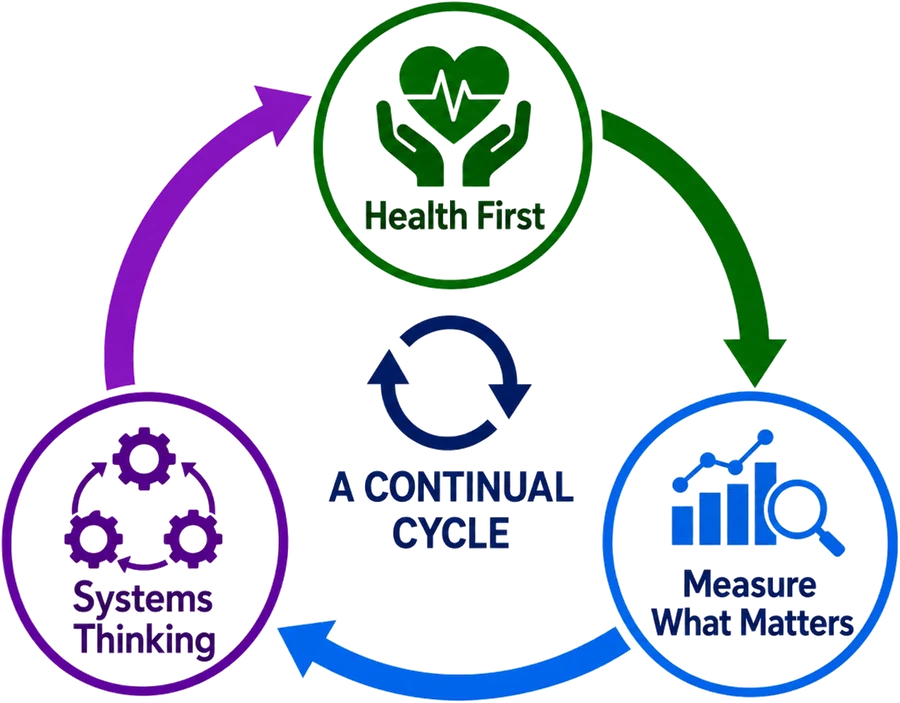
The philosophy
Health First
Health is the foundation of sustainable wellbeing, resilience and performance.
The mechanism
Measure What Matters
Measure, understand, act, re-measure. What gets measured gets managed.
The methodology
Systems Thinking
Outcomes come from systems, habits and environments, not motivation alone.
Together they form a continual improvement cycle: each turn builds on the last.
Questions
Frequently asked questions
What is the Psychosocial Compliance Academy?
The Psychosocial Compliance Academy provides health literacy training from the Optimise Health Foundation that helps organisations meet their psychosocial safety duties. It offers three online micro-learning modules (health literacy for everyone, health-oriented leadership for leaders, and leading psychosocial safety for leaders, health and safety representatives and WHS teams) plus tailored programs for your workforce.
What is a psychosocial hazard?
A psychosocial hazard is anything in the design or management of work, the work environment, workplace interactions or behaviours, or plant at work that may cause psychological or physical harm. Common examples in Safe Work Australia's model Code of Practice include high job demands, low job control, poor support, bullying, harassment and traumatic events.
How can a psychosocial hazard lead to cardiovascular disease?
When the stress response is frequent, prolonged or severe, cortisol keeps blood glucose and insulin raised, sleep and routines suffer, and excess energy is stored as visceral fat around the organs. Visceral fat drives chronic inflammation, which damages blood vessels and deepens insulin resistance. This pathway is strongly linked to cardiovascular disease, one of the harms the model Code of Practice names.
Which legal duties does this training support?
Work health and safety laws (the model Work Health and Safety Act, and Victoria’s own Act) require employers to provide information, training and instruction, and to consult workers about hazards. This training supports both duties. It does not replace an organisation’s psychosocial risk assessment or its duty to eliminate or minimise hazards.
Why does health literacy matter for psychosocial safety?
Health literacy matters because the law names cardiovascular and musculoskeletal harm alongside psychological harm, yet most training only covers the psychological side. When leaders and workers understand how hazards affect the body, they can recognise hazards earlier, take part in consultation meaningfully, and build the reserve to meet demands that cannot be removed.
What is health-oriented leadership?
Health-oriented leadership is a model developed by Franke, Felfe and Pundt (2014) describing how leaders look after their own health (SelfCare) and their team's health (StaffCare), through valuing health, noticing strain and acting on it. Module 2 adapts it into three actions: prioritise health, model healthy behaviour, and build systems that support it.
Who is the training for, and how long does it take?
Module 1 is for everyone in an organisation, Module 2 is for leaders at every level, and Module 3 is for leaders, health and safety representatives and WHS teams. Each takes about 25 minutes, and progress saves as you go. The Academy works with all organisations and has extensive experience with high-demand roles, including emergency services, defence, health care, education and government teams.
Can I try it for free?
Yes. Anyone can try Module 1 online now, and progress is saved only in your own browser. For a trial across your organisation, contact us at contact@ohf.org.au. Organisations can licence all three modules for all staff, with de-identified completion and knowledge results.
Is this medical advice?
No. The Academy provides health education, not diagnosis or medical advice. Talk to your GP about your own health, and call 000 in an emergency.
Sources and acknowledgements
We don't reinvent established science; we bring it together and focus it on health literacy. The hazards and harms come from Safe Work Australia's model Code of Practice, and Module 2 adapts the Health-Oriented Leadership model of Franke, Felfe and Pundt (2014) into three practical actions. Every source below has been checked against its journal or publisher record.
Module 1: Health literacy, the bridge from hazard to harm · 71 references
- Australian Bureau of Statistics (2008). Health Literacy, Australia, 2006 (cat. no. 4233.0). Canberra: ABS. abs.gov.au/ausstats/abs@.nsf/mf/4233.0
- Bakker AB, Demerouti E (2007). The Job Demands–Resources model: state of the art. Journal of Managerial Psychology, 22(3), 309–328. doi.org/10.1108/02683940710733115
- Berkman ND, Sheridan SL, Donahue KE, Halpern DJ, Crotty K (2011). Low health literacy and health outcomes: an updated systematic review. Annals of Internal Medicine, 155(2), 97–107. doi.org/10.7326/0003-4819-155-2-201107190-00005
- Björntorp P (2001). Do stress reactions cause abdominal obesity and comorbidities? Obesity Reviews, 2(2), 73–86. doi.org/10.1046/j.1467-789x.2001.00027.x
- Blascovich J, Tomaka J (1996). The biopsychosocial model of arousal regulation. In MP Zanna (Ed.), Advances in Experimental Social Psychology (Vol. 28, pp. 1–51). San Diego: Academic Press. doi.org/10.1016/S0065-2601(08)60235-X
- Buffey AJ, Herring MP, Langley CK, Donnelly AE, Carson BP (2022). The acute effects of interrupting prolonged sitting time in adults with standing and light-intensity walking on biomarkers of cardiometabolic health in adults: a systematic review and meta-analysis. Sports Medicine, 52(8), 1765–1787. doi.org/10.1007/s40279-022-01649-4
- Bull FC, Al-Ansari SS, Biddle S, et al. (2020). World Health Organization 2020 guidelines on physical activity and sedentary behaviour. British Journal of Sports Medicine, 54(24), 1451–1462. doi.org/10.1136/bjsports-2020-102955
- Buxton OM, Pavlova M, Reid EW, Wang W, Simonson DC, Adler GK (2010). Sleep restriction for 1 week reduces insulin sensitivity in healthy men. Diabetes, 59(9), 2126–2133. doi.org/10.2337/db09-0699
- Cappuccio FP, D'Elia L, Strazzullo P, Miller MA (2010). Quantity and quality of sleep and incidence of type 2 diabetes: a systematic review and meta-analysis. Diabetes Care, 33(2), 414–420. doi.org/10.2337/dc09-1124
- Chandola T, Brunner E, Marmot M (2006). Chronic stress at work and the metabolic syndrome: prospective study. BMJ, 332(7540), 521–525. doi.org/10.1136/bmj.38693.435301.80
- Debette S, Beiser A, Hoffmann U, et al. (2010). Visceral fat is associated with lower brain volume in healthy middle-aged adults. Annals of Neurology, 68(2), 136–144. doi.org/10.1002/ana.22062
- DeFronzo RA, Jacot E, Jequier E, Maeder E, Wahren J, Felber JP (1981). The effect of insulin on the disposal of intravenous glucose: results from indirect calorimetry and hepatic and femoral venous catheterization. Diabetes, 30(12), 1000–1007. doi.org/10.2337/diab.30.12.1000
- Després JP, Lemieux I (2006). Abdominal obesity and metabolic syndrome. Nature, 444(7121), 881–887. doi.org/10.1038/nature05488
- Diamanti-Kandarakis E, Dunaif A (2012). Insulin resistance and the polycystic ovary syndrome revisited: an update on mechanisms and implications. Endocrine Reviews, 33(6), 981–1030. doi.org/10.1210/er.2011-1034
- Epel ES, McEwen B, Seeman T, et al. (2000). Stress and body shape: stress-induced cortisol secretion is consistently greater among women with central fat. Psychosomatic Medicine, 62(5), 623–632. doi.org/10.1097/00006842-200009000-00005
- Evert AB, Dennison M, Gardner CD, et al. (2019). Nutrition therapy for adults with diabetes or prediabetes: a consensus report. Diabetes Care, 42(5), 731–754. doi.org/10.2337/dci19-0014
- Finan PH, Goodin BR, Smith MT (2013). The association of sleep and pain: an update and a path forward. The Journal of Pain, 14(12), 1539–1552. doi.org/10.1016/j.jpain.2013.08.007
- Fox CS, Massaro JM, Hoffmann U, et al. (2007). Abdominal visceral and subcutaneous adipose tissue compartments: association with metabolic risk factors in the Framingham Heart Study. Circulation, 116(1), 39–48. doi.org/10.1161/CIRCULATIONAHA.106.675355
- Furukawa S, Fujita T, Shimabukuro M, et al. (2004). Increased oxidative stress in obesity and its impact on metabolic syndrome. Journal of Clinical Investigation, 114(12), 1752–1761. doi.org/10.1172/JCI21625
- Goodpaster BH, Sparks LM (2017). Metabolic flexibility in health and disease. Cell Metabolism, 25(5), 1027–1036. doi.org/10.1016/j.cmet.2017.04.015
- Harvey SB, Modini M, Joyce S, et al. (2017). Can work make you mentally ill? A systematic meta-review of work-related risk factors for common mental health problems. Occupational and Environmental Medicine, 74(4), 301–310. doi.org/10.1136/oemed-2016-104015
- Hauke A, Flintrop J, Brun E, Rugulies R (2011). The impact of work-related psychosocial stressors on the onset of musculoskeletal disorders in specific body regions: a review and meta-analysis of 54 longitudinal studies. Work & Stress, 25(3), 243–256. doi.org/10.1080/02678373.2011.614069
- Hirshkowitz M, Whiton K, Albert SM, et al. (2015). National Sleep Foundation's sleep time duration recommendations: methodology and results summary. Sleep Health, 1(1), 40–43. pubmed.ncbi.nlm.nih.gov/29073412/
- Hobfoll SE (1989). Conservation of resources: a new attempt at conceptualizing stress. American Psychologist, 44(3), 513–524. doi.org/10.1037/0003-066X.44.3.513
- Hotamisligil GS (2006). Inflammation and metabolic disorders. Nature, 444(7121), 860–867. doi.org/10.1038/nature05485
- International Organization for Standardization (2021). ISO 45003:2021 Occupational health and safety management: Psychological health and safety at work: Guidelines for managing psychosocial risks. Geneva: ISO. iso.org/standard/64283.html
- Juster RP, McEwen BS, Lupien SJ (2010). Allostatic load biomarkers of chronic stress and impact on health and cognition. Neuroscience & Biobehavioral Reviews, 35(1), 2–16. doi.org/10.1016/j.neubiorev.2009.10.002
- Karasek RA (1979). Job demands, job decision latitude, and mental strain: implications for job redesign. Administrative Science Quarterly, 24(2), 285–308. jstor.org/stable/2392498
- Kim J, Montagnani M, Koh KK, Quon MJ (2006). Reciprocal relationships between insulin resistance and endothelial dysfunction: molecular and pathophysiological mechanisms. Circulation, 113, 1888–1904.
- Kivimäki M, Jokela M, Nyberg ST, et al. (2015). Long working hours and risk of coronary heart disease and stroke: a systematic review and meta-analysis of published and unpublished data for 603 838 individuals. The Lancet, 386(10005), 1739–1746. doi.org/10.1016/S0140-6736(15)60295-1
- Kivimäki M, Nyberg ST, Batty GD, et al., for the IPD-Work Consortium (2012). Job strain as a risk factor for coronary heart disease: a collaborative meta-analysis of individual participant data. The Lancet, 380, 1491–1497. doi.org/10.1016/S0140-6736(12)60994-5
- Kivimäki M, Steptoe A (2018). Effects of stress on the development and progression of cardiovascular disease. Nature Reviews Cardiology, 15(4), 215–229. doi.org/10.1038/nrcardio.2017.189
- LaMontagne AD, Keegel T, Louie AM, Ostry A, Landsbergis PA (2007). A systematic review of the job-stress intervention evaluation literature, 1990–2005. International Journal of Occupational and Environmental Health, 13(3), 268–280. doi.org/10.1179/oeh.2007.13.3.268
- Lane MM, Gamage E, Du S, et al. (2024). Ultra-processed food exposure and adverse health outcomes: umbrella review of epidemiological meta-analyses. BMJ, 384, e077310. doi.org/10.1136/bmj-2023-077310
- Lang J, Ochsmann E, Kraus T, Lang JWB (2012). Psychosocial work stressors as antecedents of musculoskeletal problems: a systematic review and meta-analysis of stability-adjusted longitudinal studies. Social Science & Medicine, 75(7), 1163–1174. doi.org/10.1016/j.socscimed.2012.04.015
- Lauby-Secretan B, Scoccianti C, Loomis D, et al., for the IARC Handbook Working Group (2016). Body fatness and cancer: viewpoint of the IARC Working Group. New England Journal of Medicine, 375(8), 794–798. doi.org/10.1056/NEJMsr1606602
- Lazarus RS, Folkman S (1984). Stress, Appraisal, and Coping. New York: Springer Publishing Company.
- Livingston G, Huntley J, Liu KY, et al. (2024). Dementia prevention, intervention, and care: 2024 report of the Lancet standing Commission. The Lancet, 404(10452), 572–628. doi.org/10.1016/S0140-6736(24)01296-0
- Lowell BB, Shulman GI (2005). Mitochondrial dysfunction and type 2 diabetes. Science, 307(5708), 384–387. doi.org/10.1126/science.1104343
- McEwen BS (1998). Protective and damaging effects of stress mediators. New England Journal of Medicine, 338(3), 171–179. doi.org/10.1056/NEJM199801153380307
- Miller AH, Raison CL (2016). The role of inflammation in depression: from evolutionary imperative to modern treatment target. Nature Reviews Immunology, 16(1), 22–34. doi.org/10.1038/nri.2015.5
- Neeland IJ, Ross R, Després JP, et al. (2019). Visceral and ectopic fat, atherosclerosis, and cardiometabolic disease: a position statement. The Lancet Diabetes & Endocrinology, 7(9), 715–725. doi.org/10.1016/S2213-8587(19)30084-1
- Niedhammer I, Bertrais S, Witt K (2021). Psychosocial work exposures and health outcomes: a meta-review of 72 literature reviews with meta-analysis. Scandinavian Journal of Work, Environment & Health, 47(7), 489–508. doi.org/10.5271/sjweh.3968
- Nutbeam D (2000). Health literacy as a public health goal: a challenge for contemporary health education and communication strategies into the 21st century. Health Promotion International, 15(3), 259–267.
- Nyberg ST, Fransson EI, Heikkilä K, et al., for the IPD-Work Consortium (2014). Job strain as a risk factor for type 2 diabetes: a pooled analysis of 124,808 men and women. Diabetes Care, 37(8), 2268–2275. doi.org/10.2337/dc13-2936
- Occupational Health and Safety (Psychological Health) Regulations 2025 (Vic). Commenced 1 December 2025. worksafe.vic.gov.au/news/2025-12/new-regulations-make-psychological-health-priority
- Occupational Health and Safety Act 2004 (Vic), section 21(2)(e) (information, instruction, training and supervision) and section 35 (duty to consult employees). legislation.vic.gov.au/in-force/acts/occupational-health-and-safety-act-2004
- Reynolds AN, Mann JI, Williams S, Venn BJ (2016). Advice to walk after meals is more effective for lowering postprandial glycaemia in type 2 diabetes mellitus than advice that does not specify timing: a randomised crossover study. Diabetologia, 59(12), 2572–2578. doi.org/10.1007/s00125-016-4085-2
- Richter EA, Hargreaves M (2013). Exercise, GLUT4, and skeletal muscle glucose uptake. Physiological Reviews, 93(3), 993–1017. doi.org/10.1152/physrev.00038.2012
- Safe Work Australia (2011, as amended). Model Work Health and Safety Act. Section 19 (primary duty of care), section 28 (duties of workers), section 47 (duty to consult workers) and section 48 (nature of consultation). safeworkaustralia.gov.au/law-and-regulation/model-whs-laws
- Safe Work Australia (2019). National Return to Work Strategy 2020–2030. Canberra: Safe Work Australia. safeworkaustralia.gov.au/system/files/documents/1909/national_return_to_work_strategy_2020-2030.pdf
- Safe Work Australia (2022). Model Code of Practice: Managing psychosocial hazards at work. Canberra: Safe Work Australia. safeworkaustralia.gov.au/doc/model-code-practice-managing-psychosocial-hazards-work
- Safe Work Australia (2025). Model Work Health and Safety Regulations, consolidated version as at 5 December 2025 (Parliamentary Counsel’s Committee, as released by Safe Work Australia). Regulation 39 (provision of information, training and instruction) and Division 11, regulations 55A–55D (psychosocial risks). safeworkaustralia.gov.au/law-and-regulation/model-whs-laws
- Safe Work Australia (n.d.). Differences between WHS and wellbeing. Canberra: Safe Work Australia. Accessed 28 October 2026. safeworkaustralia.gov.au/safety-topic/managing-health-and-safety/mental-health/managing-risks/differences-between-whs-and-wellbeing
- Sainsbury E, Kizirian NV, Partridge SR, Gill T, Colagiuri S, Gibson AA (2018). Effect of dietary carbohydrate restriction on glycemic control in adults with diabetes: a systematic review and meta-analysis. Diabetes Research and Clinical Practice, 139, 239–252. doi.org/10.1016/j.diabres.2018.02.026
- Sapolsky RM, Romero LM, Munck AU (2000). How do glucocorticoids influence stress responses? Integrating permissive, suppressive, stimulatory, and preparative actions. Endocrine Reviews, 21(1), 55–89. doi.org/10.1210/edrv.21.1.0389
- Shoelson SE, Lee J, Goldfine AB (2006). Inflammation and insulin resistance. Journal of Clinical Investigation, 116(7), 1793–1801. doi.org/10.1172/JCI29069
- Sørensen K, Van den Broucke S, Fullam J, et al. (2012). Health literacy and public health: a systematic review and integration of definitions and models. BMC Public Health, 12, 80. doi.org/10.1186/1471-2458-12-80
- Spiegel K, Leproult R, Van Cauter E (1999). Impact of sleep debt on metabolic and endocrine function. The Lancet, 354(9188), 1435–1439. doi.org/10.1016/S0140-6736(99)01376-8
- Spiegel K, Tasali E, Penev P, Van Cauter E (2004). Brief communication: sleep curtailment in healthy young men is associated with decreased leptin levels, elevated ghrelin levels, and increased hunger and appetite. Annals of Internal Medicine, 141(11), 846–850. doi.org/10.7326/0003-4819-141-11-200412070-00008
- Stansfeld S, Candy B (2006). Psychosocial work environment and mental health: a meta-analytic review. Scandinavian Journal of Work, Environment & Health, 32(6), 443–462. doi.org/10.5271/sjweh.1050
- Theorell T, Hammarström A, Aronsson G, et al. (2015). A systematic review including meta-analysis of work environment and depressive symptoms. BMC Public Health, 15, 738. doi.org/10.1186/s12889-015-1954-4
- Thomas G, Sehgal AR, Kashyap SR, Srinivas TR, Kirwan JP, Navaneethan SD (2011). Metabolic syndrome and kidney disease: a systematic review and meta-analysis. Clinical Journal of the American Society of Nephrology, 6(10), 2364–2373. doi.org/10.2215/CJN.02180311
- Trayhurn P (2013). Hypoxia and adipose tissue function and dysfunction in obesity. Physiological Reviews, 93(1), 1–21. doi.org/10.1152/physrev.00017.2012
- Vedaa Ø, Harris A, Bjorvatn B, et al. (2016). Systematic review of the relationship between quick returns in rotating shift work and health-related outcomes. Ergonomics, 59(1), 1–14. doi.org/10.1080/00140139.2015.1052020
- Wang T, He C (2018). Pro-inflammatory cytokines: the link between obesity and osteoarthritis. Cytokine & Growth Factor Reviews, 44, 38–50. doi.org/10.1016/j.cytogfr.2018.10.002
- Watson NF, Badr MS, Belenky G, et al. (2015). Recommended amount of sleep for a healthy adult: a joint consensus statement of the American Academy of Sleep Medicine and Sleep Research Society. Sleep, 38(6), 843–844. doi.org/10.5665/sleep.4716
- Włodarczyk M, Nowicka G (2019). Obesity, DNA damage, and development of obesity-related diseases. International Journal of Molecular Sciences, 20(5), 1146. doi.org/10.3390/ijms20051146
- World Health Organization (2000). Obesity: preventing and managing the global epidemic. Report of a WHO consultation. WHO Technical Report Series 894. Geneva: WHO.
- World Health Organization (2011). Waist circumference and waist–hip ratio: report of a WHO expert consultation, Geneva, 8–11 December 2008. Geneva: WHO. ISBN 9789241501491. who.int/publications/i/item/9789241501491
- Younossi ZM, Koenig AB, Abdelatif D, Fazel Y, Henry L, Wymer M (2016). Global epidemiology of nonalcoholic fatty liver disease: meta-analytic assessment of prevalence, incidence, and outcomes. Hepatology, 64(1), 73–84. doi.org/10.1002/hep.28431
Module 2: Health-oriented leadership · 17 references
- Beyond Blue (2018). Answering the call: National Survey, National Mental Health and Wellbeing Study of Police and Emergency Services. Final report. Melbourne: Beyond Blue. beyondblue.org.au/
- Franke F, Felfe J, Pundt A (2014). The impact of health-oriented leadership on follower health: development and test of a new instrument measuring health-promoting leadership. Zeitschrift für Personalforschung, 28(1–2), 139–161. doi.org/10.1177/239700221402800108
- International Organization for Standardization (2021). ISO 45003:2021 Occupational health and safety management: Psychological health and safety at work: Guidelines for managing psychosocial risks. Geneva: ISO. iso.org/standard/64283.html
- Kivimäki M, Jokela M, Nyberg ST, et al. (2015). Long working hours and risk of coronary heart disease and stroke: a systematic review and meta-analysis of published and unpublished data for 603 838 individuals. The Lancet, 386(10005), 1739–1746. doi.org/10.1016/S0140-6736(15)60295-1
- Kuoppala J, Lamminpää A, Liira J, Vainio H (2008). Leadership, job well-being, and health effects: a systematic review and a meta-analysis. Journal of Occupational and Environmental Medicine, 50(8), 904–915. doi.org/10.1097/JOM.0b013e31817e918d
- LaMontagne AD, Keegel T, Louie AM, Ostry A, Landsbergis PA (2007). A systematic review of the job-stress intervention evaluation literature, 1990–2005. International Journal of Occupational and Environmental Health, 13(3), 268–280. doi.org/10.1179/oeh.2007.13.3.268
- Montano D, Reeske A, Franke F, Hüffmeier J (2017). Leadership, followers' mental health and job performance in organizations: a comprehensive meta-analysis from an occupational health perspective. Journal of Organizational Behavior, 38(3), 327–350. doi.org/10.1002/job.2124
- Occupational Health and Safety (Psychological Health) Regulations 2025 (Vic). Commenced 1 December 2025. worksafe.vic.gov.au/news/2025-12/new-regulations-make-psychological-health-priority
- Occupational Health and Safety Act 2004 (Vic), section 21(2)(e) (information, instruction, training and supervision) and section 35 (duty to consult employees). legislation.vic.gov.au/in-force/acts/occupational-health-and-safety-act-2004
- Petrie K, Milligan-Saville J, Gayed A, et al. (2018). Prevalence of PTSD and common mental disorders amongst ambulance personnel: a systematic review and meta-analysis. Social Psychiatry and Psychiatric Epidemiology, 53(9), 897–909. doi.org/10.1007/s00127-018-1539-5
- R U OK? (n.d.). How to ask R U OK?: Ask, Listen, Encourage action, Check in. R U OK? Limited. ruok.org.au/how-to-ask
- Safe Work Australia (2011, as amended). Model Work Health and Safety Act. Section 19 (primary duty of care), section 28 (duties of workers), section 47 (duty to consult workers) and section 48 (nature of consultation). safeworkaustralia.gov.au/law-and-regulation/model-whs-laws
- Safe Work Australia (2022). Model Code of Practice: Managing psychosocial hazards at work. Canberra: Safe Work Australia. safeworkaustralia.gov.au/doc/model-code-practice-managing-psychosocial-hazards-work
- Safe Work Australia (2025). Model Work Health and Safety Regulations, consolidated version as at 5 December 2025 (Parliamentary Counsel’s Committee, as released by Safe Work Australia). Regulation 39 (provision of information, training and instruction) and Division 11, regulations 55A–55D (psychosocial risks). safeworkaustralia.gov.au/law-and-regulation/model-whs-laws
- Safe Work Australia (n.d.). Differences between WHS and wellbeing. Canberra: Safe Work Australia. Accessed 28 October 2026. safeworkaustralia.gov.au/safety-topic/managing-health-and-safety/mental-health/managing-risks/differences-between-whs-and-wellbeing
- Skakon J, Nielsen K, Borg V, Guzman J (2010). Are leaders' well-being, behaviours and style associated with the affective well-being of their employees? A systematic review of three decades of research. Work & Stress, 24(2), 107–139. doi.org/10.1080/02678373.2010.495262
- Vedaa Ø, Harris A, Bjorvatn B, et al. (2016). Systematic review of the relationship between quick returns in rotating shift work and health-related outcomes. Ergonomics, 59(1), 1–14. doi.org/10.1080/00140139.2015.1052020
Module 3: Leading psychosocial safety · 11 references
- Gollwitzer PM, Sheeran P (2006). Implementation intentions and goal achievement: a meta-analysis of effects and processes. Advances in Experimental Social Psychology, 38, 69–119. doi.org/10.1016/S0065-2601(06)38002-1
- International Organization for Standardization (2021). ISO 45003:2021 Occupational health and safety management: Psychological health and safety at work: Guidelines for managing psychosocial risks. Geneva: ISO. iso.org/standard/64283.html
- Kivimäki M, Jokela M, Nyberg ST, et al. (2015). Long working hours and risk of coronary heart disease and stroke: a systematic review and meta-analysis of published and unpublished data for 603 838 individuals. The Lancet, 386(10005), 1739–1746. doi.org/10.1016/S0140-6736(15)60295-1
- LaMontagne AD, Keegel T, Louie AM, Ostry A, Landsbergis PA (2007). A systematic review of the job-stress intervention evaluation literature, 1990–2005. International Journal of Occupational and Environmental Health, 13(3), 268–280. doi.org/10.1179/oeh.2007.13.3.268
- Occupational Health and Safety (Psychological Health) Regulations 2025 (Vic). Commenced 1 December 2025. worksafe.vic.gov.au/news/2025-12/new-regulations-make-psychological-health-priority
- Occupational Health and Safety Act 2004 (Vic), section 21(2)(e) (information, instruction, training and supervision) and section 35 (duty to consult employees). legislation.vic.gov.au/in-force/acts/occupational-health-and-safety-act-2004
- Safe Work Australia (2011, as amended). Model Work Health and Safety Act. Section 19 (primary duty of care), section 28 (duties of workers), section 47 (duty to consult workers) and section 48 (nature of consultation). safeworkaustralia.gov.au/law-and-regulation/model-whs-laws
- Safe Work Australia (2022). Model Code of Practice: Managing psychosocial hazards at work. Canberra: Safe Work Australia. safeworkaustralia.gov.au/doc/model-code-practice-managing-psychosocial-hazards-work
- Safe Work Australia (2025). Model Work Health and Safety Regulations, consolidated version as at 5 December 2025 (Parliamentary Counsel’s Committee, as released by Safe Work Australia). Regulation 39 (provision of information, training and instruction) and Division 11, regulations 55A–55D (psychosocial risks). safeworkaustralia.gov.au/law-and-regulation/model-whs-laws
- Safe Work Australia (n.d.). Differences between WHS and wellbeing. Canberra: Safe Work Australia. Accessed 28 October 2026. safeworkaustralia.gov.au/safety-topic/managing-health-and-safety/mental-health/managing-risks/differences-between-whs-and-wellbeing
- Vedaa Ø, Harris A, Bjorvatn B, et al. (2016). Systematic review of the relationship between quick returns in rotating shift work and health-related outcomes. Ergonomics, 59(1), 1–14. doi.org/10.1080/00140139.2015.1052020
See which claim each source supports, and where the evidence has limits, on the References page (79 sources).
See the referencesGet in touch
Let's start the conversation
Ask about an organisation licence, a tailored program, or running the modules alongside your psychosocial hazard assessments.
Working with emergency services, health care, education and government teams.